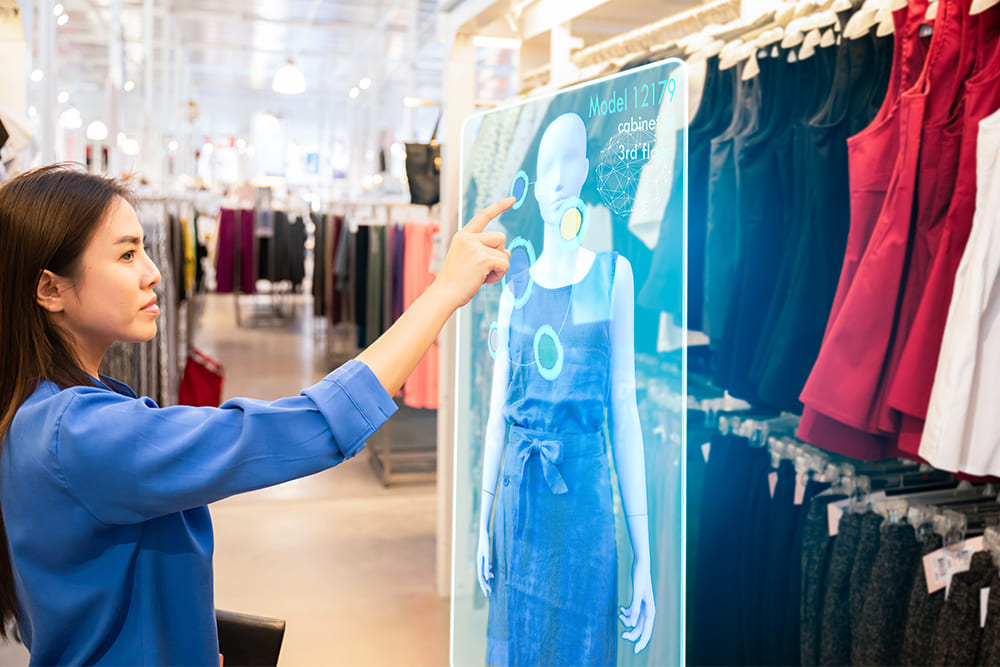
Augmented reality shopping represents far more than a technological convenience—it taps into fundamental psychological principles that explain why virtual try-ons dramatically increase customer confidence and transform purchasing behavior. Understanding these psychological mechanisms reveals why AR has become such a powerful driver of e-commerce success, fundamentally altering how consumers evaluate products and make confident purchasing decisions.
Reducing Cognitive Dissonance Through Pre-Purchase Visualization
One of the most significant psychological mechanisms underlying AR’s success is its ability to resolve prepurchase cognitive dissonance—the mental tension consumers experience when facing multiple similar product options with uncertain outcomes. Traditional online shopping creates substantial cognitive dissonance because customers must make significant financial decisions with incomplete information, generating anxiety about whether they’re making the right choice.
AR directly reduces this dissonance by enabling mental imagery that makes abstract product concepts concrete. Rather than imagining how a lipstick shade might appear on their skin tone or how furniture would fit in their living room, customers can visualize these outcomes with photorealistic accuracy. This transformation from abstract uncertainty to concrete visualization fundamentally alters psychological experience.
Research demonstrates that AR reduces cognitive dissonance by 32-38% through mediating effects on perceived product similarity and confusion caused by overchoice. The mechanism operates through specific pathways: when customers perceive less similarity between product options (enabled by AR’s detailed visualization), they experience clearer choice differentiation; when AR reduces confusion from overwhelming assortment, decision comfort increases. This reduction in prepurchase cognitive dissonance translates directly to higher purchase intentions and greater willingness to pay for products.
Telepresence and the Sensation of “Being There”
A critical psychological construct explaining AR’s effectiveness is telepresence—the sensation of being physically present within the virtual environment rather than observing it from a distance. When shoppers use AR to visualize products in their actual spaces or on their bodies, they experience presence, creating a psychological state where the boundary between physical and digital dissolves.
Technological factors driving telepresence include interactivity (the ability to manipulate, rotate, and customize products) and vividness (the richness and detail of the visual representation). When AR delivers high-quality 3D models with realistic lighting and material rendering, users experience heightened presence. Combined with intuitive touch controls enabling seamless interaction, presence intensifies.
This telepresence phenomenon triggers profound psychological effects. Consumers experiencing high telepresence feel fundamentally different about their shopping decisions—research shows that telepresence significantly improves purchase confidence and transforms how consumers evaluate product suitability. The psychological mechanism: when users feel genuinely present within the AR experience, their purchase decisions feel more grounded, more certain, and more reflective of actual reality rather than abstract online shopping.
Mental Imagery and Enhanced Memory Encoding
Virtual try-ons activate vivid mental imagery—the psychological ability to create detailed, multisensory mental representations of scenarios. When a customer uses AR makeup try-on to see exactly how a lipstick shade appears on their complexion, they create lasting mental images substantially more detailed than static product photos could generate.
Research specifically examining mental imagery in AR shopping contexts found that three dimensions of mental imagery significantly increase with AR usage: vividness (clarity of mental images), elaboration (detail and complexity), and quantity (number of distinct images created). These enhanced mental images subsequently predict stronger purchase intention—when consumers have detailed, multisensory mental representations of product usage, they feel substantially more confident purchasing.
The psychological effect extends beyond initial visualization. These vivid mental images persist in memory, enabling customers to retain detailed product knowledge that informs confident decision-making. When customers return to review their purchase decision hours or days later, the mental images created through AR visualization remain accessible, reinforcing confidence in their choice.
Embodied Cognition and Self-Reference Processing
Embodied cognition refers to how our physical bodies and sensory experiences shape thought processes and decision-making. When AR enables customers to visualize products in relation to their own bodies—seeing how clothes drape on their specific body shape, how makeup appears on their individual facial features—they activate embodied cognition mechanisms that create distinctive psychological effects.
Research on embodied cognition in AR shopping reveals that AR creates deeper cognitive processing because customers integrate product information with their self-concept. When you visualize yourself wearing clothing through AR, the cognitive process differs fundamentally from viewing a model wearing the same clothing. Your body becomes the reference frame, activating self-related processing that triggers richer, more personally relevant cognition.
This self-referential processing substantially enhances both confidence and engagement. Customers who view AR experiences through embodied cognition frameworks (experiencing products in relation to their own bodies) report significantly higher confidence in purchasing decisions compared to those viewing generic product presentations. The mechanism: when products are cognitively linked to your body and personal context through embodied cognition, they feel more “yours” before you even purchase them.
Flow Experience and Optimal Engagement
Flow experience—a psychological state of complete immersion and absorption in an activity—plays a critical role in AR shopping psychology. When shopping through AR, customers who achieve flow states experience time disappearing, become deeply engaged with product exploration, and report substantially higher satisfaction.
Factors driving flow in AR contexts include perceived informativeness (the richness and relevance of product information), perceived aesthetics (the visual appeal of the AR experience), and perceived novelty (the sense of exploring new, exciting experiences). When AR successfully combines informative product details with visually appealing presentation and introduces novel interactive features, customers enter flow states characterized by complete absorption.
The psychological importance of flow emerges through its effects on psychological ownership—the sensation of mentally owning products before physically acquiring them. Research directly examining this relationship found that flow experience directly increases psychological ownership, which in turn significantly boosts purchase intention and repeat purchase likelihood. Customers who enter flow states while exploring products through AR develop stronger psychological attachment, creating ownership sensations that make purchasing feel inevitable.
Psychological Ownership and the “Endowment Effect”
Building on flow experience, AR creates powerful psychological ownership—the sense of ownership without legal or financial claim. When customers extensively explore products through AR, interact with them in their personal contexts, and customize them to their preferences, they begin experiencing products as psychologically “theirs”.
This psychological ownership taps into a well-documented cognitive bias called the “endowment effect”—the tendency to value things more highly once we feel we own them. In AR shopping, this manifests as customers becoming increasingly committed to products they’ve extensively customized and visualized through AR. The psychology: the more time and cognitive effort invested in exploring and personalizing through AR, the greater the psychological attachment, and consequently, the higher the likelihood of purchase.
Research specifically examined this dynamic in Zara’s in-store AR try-on experiences, finding that flow experience mediates the relationship between product perception and psychological ownership, with brand attachment moderating this entire process. Customers who experienced strong flow while trying on clothing through AR developed substantially higher psychological ownership, which subsequently predicted purchase decisions.
Reducing Uncertainty and Risk Perception
Online shopping inherently involves perceived risk—customers face uncertainty about product quality, fit, appearance, and suitability. Virtual try-ons directly reduce multiple dimensions of perceived risk.
Specifically, AR reduces:
- Performance risk: uncertainty about whether products will function as expected (addressed through detailed visualization showing product features in realistic contexts)
- Fit risk: uncertainty about sizing and how items will appear (eliminated through body-mapped AR visualization)
- Social risk: concern about whether others will approve of choices (reduced through social sharing capabilities allowing peer feedback)
- Financial risk: worry about wasting money on unsuitable products (mitigated through reduced return likelihood)
When perceived risk decreases substantially through AR visualization, confidence increases proportionally. Research demonstrates that each unit decrease in perceived risk corresponds to approximately 2.1 unit increases in purchase confidence. The psychological mechanism: reduced uncertainty translates directly into increased willingness to complete purchases with mental peace.
Instant Gratification and Affective Responses
AR shopping creates immediate emotional gratification through interactive engagement and vivid visualization. Research examining emotional responses to AR found that AR generates significantly stronger emotional reactions than traditional product presentations, with emotions including excitement, pleasure, enjoyment, and satisfaction.
These positive emotional states serve as critical drivers of purchase intent. Affective responses (emotional reactions) to AR predict purchase intention more strongly than cognitive responses (rational evaluation of usefulness). This reveals an important truth about AR psychology: while rational arguments favor purchasing (products are practical, offer good value), the emotional excitement generated through AR try-on experiences often proves more influential in purchase decisions.
The vividness and interactivity of AR specifically trigger instant gratification mechanisms—the sensation of immediate pleasure and reward. When customers see makeup appear instantly on their face or furniture positioned perfectly in their room, immediate pleasure reinforces positive associations with the product, making purchase feel rewarding rather than risky.
Addressing Decision Paralysis Through Cognitive Load Reduction
Modern consumers face decision paralysis when confronted with overwhelming product assortment—the more options available, the greater cognitive effort required for comparison, leading to postponed or abandoned purchases. AR combats this through cognitive load reduction.
The mechanism operates through multiple channels. First, AR reduces prepurchase cognitive dissonance which constitutes a significant portion of total cognitive load when making decisions. Second, by making product attributes immediately visible rather than requiring comparison across multiple pages, AR simplifies information processing. Third, through interactive visualization, customers can rapidly evaluate products, reducing time investment.
Research quantifies this effect: consumers using AR report 34-42% lower cognitive load compared to traditional online shopping methods. This reduced mental strain translates to greater purchase certainty—when decision-making feels less mentally exhausting, customers feel more confident in their choices and more likely to complete purchases.
Social Proof and Shared Decision-Making
AR shopping experiences are inherently shareable—customers can capture screenshots or videos of virtual try-ons to share with friends and family for feedback. This taps into the psychological power of social proof—the tendency to perceive choices as correct when others validate them.
The psychology of social proof in AR contexts operates differently than traditional social influence. Rather than being influenced by strangers’ reviews, customers share their personal AR experiences with trusted friends and family, creating intimate decision-making contexts. This personal social validation carries greater psychological weight, substantially increasing purchase confidence.
Additionally, the social sharing itself creates commitment—once customers publicly share an AR try-on experience with others, psychological commitment to purchasing increases due to the psychological need for consistency. After publicly stating “I love how this looks on me,” customers feel motivated to follow through with purchases to maintain consistency between their stated preferences and their behaviors.
The Confidence Cascade: From Visualization to Purchase
Synthesizing these psychological mechanisms reveals a confidence cascade explaining AR’s impact on purchase behavior:
- Initial Visualization: AR enables customers to see products realistically in personally relevant contexts
- Reduced Uncertainty: Visualization transforms abstract products into concrete images, reducing prepurchase cognitive dissonance
- Enhanced Mental Imagery: Vivid AR experiences create detailed mental representations persisting in memory
- Embodied Cognition Activation: Customers integrate products with self-concept through body-mapped AR experiences
- Psychological Ownership: Extensive interaction through AR creates psychological attachment and endowment effects
- Flow Experience Achievement: Engaging AR interactions create flow states increasing psychological ownership
- Emotional Gratification: Instant visualization triggers positive emotions reinforcing favorable product associations
- Social Validation: Shared AR experiences enable peer feedback reinforcing purchase decisions
- Increased Confidence: Culmination of these mechanisms produces substantially elevated purchase confidence
- Purchase Completion: Confidence translates to action—purchasing becomes the natural progression
Gender Differences in AR Psychology
Research reveals interesting gender divergence in AR psychology. Males are primarily motivated by hedonic (enjoyment) benefits of AR, experiencing pleasure from interactive product exploration and gaming-like elements. Females place greater emphasis on utilitarian (practical decision-making) benefits, using AR specifically to confirm sizing accuracy and evaluate fit.
This gender difference informs optimal AR design: successful implementations emphasize both enjoyment (capturing male interest) and practical accuracy (satisfying female requirements). When AR experiences deliver both dimensions effectively, they appeal universally to diverse consumer segments.
Behavioral Economics and Loss Aversion
Beyond psychological satisfaction, AR reduces what behavioral economists call loss aversion tendencies—the disproportionate pain from losses compared to pleasure from equivalent gains. Customers purchasing through AR experience reduced losses (due to lower return rates and higher fit accuracy), directly satisfying loss-averse psychological patterns.
This loss aversion reduction creates a subtle but profound psychological shift: customers mentally reframe purchases from risky gambles to confident decisions with minimal downside risk. When the probability of regretful returns decreases substantially through AR accuracy, purchase psychology transforms from anxiety-driven to confidence-driven.
Preventing Post-Purchase Dissonance and Buyer’s Remorse
Perhaps most significantly, AR prevents post-purchase dissonance (buyer’s remorse)—the psychological regret experienced after discovering purchased products don’t match expectations. When customers visualize products accurately through AR before purchasing, expectations closely align with reality, creating post-purchase satisfaction rather than regret.
This prevention of buyer’s remorse has cascading psychological benefits: satisfied customers develop stronger brand trust, increase repeat purchase likelihood, generate positive word-of-mouth, and build emotional loyalty to brands that enabled confident purchasing.
The psychology underlying AR shopping success reveals that confidence increases through multiple reinforcing mechanisms: cognitive dissonance reduction, enhanced mental imagery, embodied cognition activation, psychological ownership development, flow state achievement, emotional gratification, and social validation. Rather than representing isolated psychological phenomena, these mechanisms create a confidence cascade where each element builds on previous ones, ultimately producing substantially elevated purchase confidence. Virtual try-ons work psychologically not because they’re entertaining, but because they address fundamental cognitive and emotional barriers to confident online purchasing. By transforming abstract product concepts into concrete visualizations, reducing decision-making uncertainty, activating self-relevant processing, and enabling social validation, AR shopping taps into core psychological principles that explain why consumers increasingly prefer immersive, interactive shopping experiences. As AR technology continues advancing, understanding these underlying psychological mechanisms becomes increasingly important for retailers seeking to design experiences that genuinely enhance customer confidence and satisfaction rather than merely incorporating technology for its own sake.