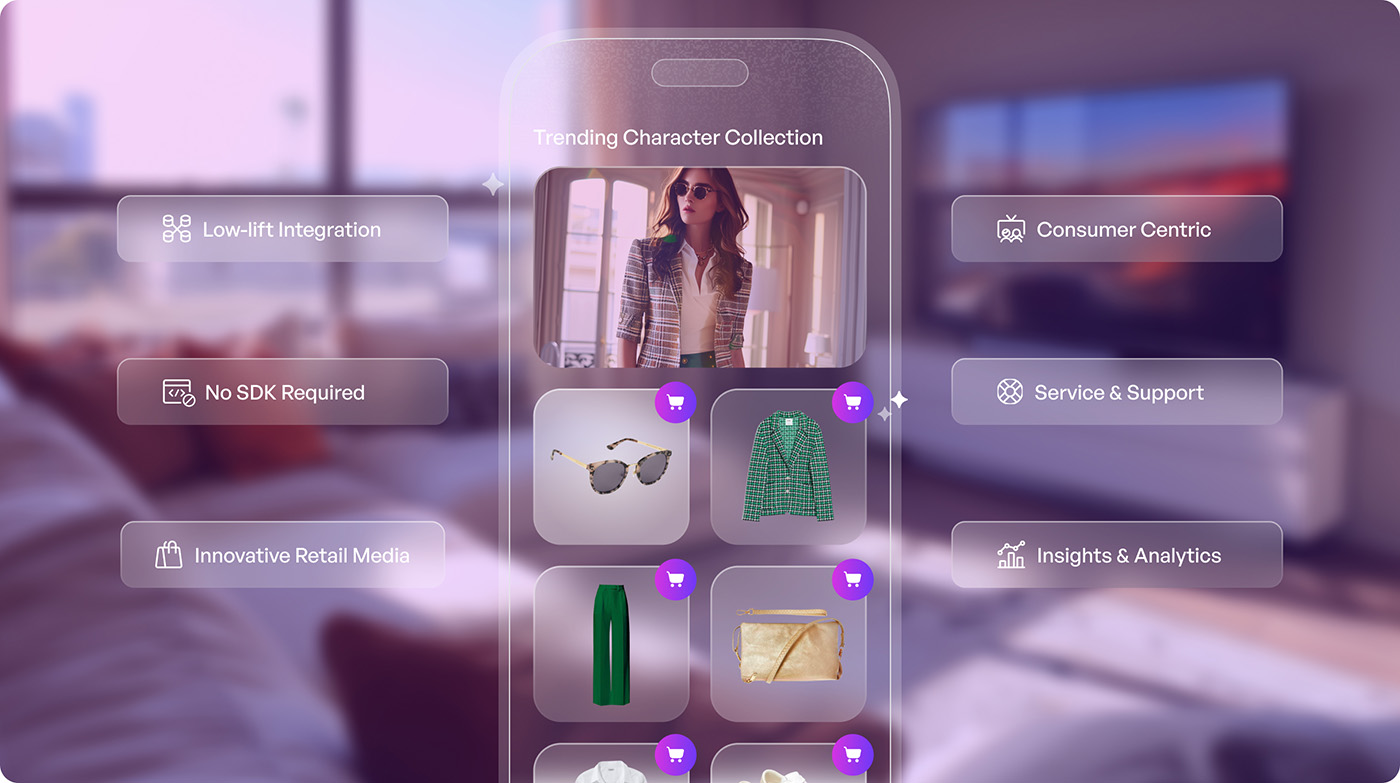
The augmented reality shopping landscape stands at an inflection point. After years of technological development and market validation, AR has transitioned from emerging technology to mainstream infrastructure. Looking ahead to 2026 and beyond, industry developments point toward a future where AR becomes so deeply integrated into retail that the distinction between “AR shopping” and “shopping” simply disappears. The following predictions outline the transformative changes retailers and consumers should anticipate.
1. Smart Glasses and Wearable AR Become the Primary Shopping Interface
Perhaps the most consequential development for 2026 is the mainstream arrival of consumer-grade smart glasses with integrated AR capabilities. Meta’s Ray-Ban Display glasses, launching in September 2025 at $799, represent the watershed moment. Featuring a compact color display, head-of-display notifications, and voice control integrated with Meta AI, the glasses provide practical, consumer-friendly AR hardware for the first time.
Market Acceleration: Meta plans to manufacture 10 million pairs of Meta glasses annually starting in 2026, signaling massive production scaling. As smart glasses proliferate, the hardware becomes the primary interface through which consumers shop. Rather than holding phones up to visualize furniture or try on makeup, shoppers will wear AR-capable glasses that overlay product information and virtual try-ons naturally into their field of view.
Retail Transformation: This shift fundamentally transforms shopping. Store associates will use AR glasses to access customer profiles, inventory information, and product recommendations in real-time during conversations. Customers will browse entire catalogs through glasses while sitting on their couches, pointing at items they wish to purchase through natural hand gestures.
Neural Control Integration: The neural wristband accompanying Meta’s Ray-Ban Display demonstrates the trajectory—intuitive control through subtle hand gestures rather than voice commands or touchscreens. Future iterations will increasingly move toward thought-based control through neural interfaces, enabling shopping interactions that feel natural and require minimal cognitive effort.
2. Haptic Feedback Creates Multisensory Virtual Try-On Experiences
Currently, AR shopping relies entirely on visual feedback. Future implementations will integrate haptic feedback (touch sensations) creating multisensory experiences approximating physical product interaction.
Texture and Weight Simulation: By 2026-2027, customers will “feel” fabric textures through haptic gloves or wristbands. Silk will feel distinctly different from denim; linen will demonstrate characteristic texture. More sophisticatedly, systems will simulate fabric weight—understanding that heavy winter coats feel substantially different than light summer blouses.
Fit Sensation Feedback: Haptic feedback will communicate how tightly or loosely clothing fits. When trying on a virtual dress, haptic feedback will simulate the sensation of fitting snugly at the waist or loosely around the hips. Temperature simulation will enable customers to “feel” how warm cashmere appears compared to cotton.
Furniture Assembly Simulation: For furniture, haptic feedback will communicate product weight and structure. Moving a heavy oak table virtually through haptic feedback will feel distinctly different from moving a lightweight modern piece.
Market Timeline: While haptic integration remains nascent, multiple companies are developing consumer-grade haptic devices for AR shopping. Expect early adopter implementations emerging in 2026, with mainstream adoption accelerating through 2027-2028.
3. AI-Powered Personal Shopping Assistants Become Standard Infrastructure
Rather than customers searching through catalogs, AI-powered personal shopping assistants will proactively guide shopping journeys based on accumulated preferences, purchase history, and real-time behavior.
Predictive Purchasing: Advanced AI models will predict customer needs before customers consciously recognize them. Based on seasonal patterns, previous purchases, weather data, and lifestyle information, AI assistants will proactively surface product recommendations. When winter approaches, the assistant might suggest appropriate outerwear; when travel is detected, it recommends luggage or travel accessories.
Autonomous Purchasing: More controversially, autonomous AI agents will begin making purchases on behalf of customers. OpenAI’s latest API advancements demonstrate this trajectory—AI models conducting web searches, analyzing product options, and completing purchases without explicit customer authorization. While this raises consumer autonomy concerns, convenience-focused segments will embrace it eagerly. Regular household staples could simply appear at doorsteps through autonomous AI purchasing, eliminating reorder friction entirely.
Conversational Shopping Interfaces: Rather than browsing product listings, customers will interact with sophisticated natural language interfaces. “I need an outfit for a beach vacation in Hawaii” becomes the search query, with AI recommending specific items, showing virtual try-ons, and completing checkout through conversation.
Multimodal Interaction: NVIDIA’s blueprint for retail shopping assistants demonstrates the trajectory—AI agents understanding text, images, voice, and camera input simultaneously. A customer pointing their phone camera at an item asks “Does this come in blue?” and the AI responds with specific information and sizing recommendations.
4. Voice Commerce Becomes the Dominant Interface for Repeat Purchases
Voice commerce represents one of 2026’s most significant trends, particularly for replenishment shopping. Brands like Amazon have already demonstrated that voice ordering works at scale; 2026 will see explosive expansion across retail.
Natural Shopping Through Conversation: Rather than navigating interfaces, customers will shop through natural conversation. “Reorder my favorite coffee” or “Add milk to my shopping list” becomes how people shop. Smart home devices, smartwatches, and AR glasses will all support voice shopping seamlessly.
Voice-Activated Product Discovery: Voice interfaces will enable sophisticated product discovery. Customers asking “Show me formal wear for a wedding” will receive curated recommendations with visual displays showing options they can then try on through AR.
Predictive Voice Commerce: AI analyzing purchase patterns will proactively offer voice-based recommendations. Before customers consciously recognize they’re running low on essentials, voice assistants will ask “Would you like me to reorder your favorite shampoo?”
Market Adoption: Retailers successfully implementing voice commerce will see reduced cart abandonment, faster purchasing cycles, and higher repeat purchase frequency. By 2026, voice commerce adoption is projected to reach mainstream levels, with voice assistants handling 20-30% of repeat purchases for leading retailers.
5. Metaverse Virtual Storefronts Enable Digital-First Shopping
While “metaverse” remains a contested term, virtual shopping environments are clearly emerging as significant retail channels. By 2026, expect substantial metaverse retail presence alongside physical and e-commerce channels.
3D Virtual Stores: Rather than 2D websites, retailers will operate immersive 3D virtual stores accessible via VR headsets or desktop/mobile apps. Customers navigate these spaces with personal avatars, exploring products in realistic three-dimensional environments.
Avatar-Based Try-On: Virtual avatars will replicate customer body shapes, enabling try-ons in immersive environments. Customers designing complete outfits will see how items coordinate on their avatars from all angles under various lighting conditions.
Phygital Commerce: The most significant metaverse retail development is phygital integration—shopping purely digital items (NFT-based digital clothing, digital accessories for gaming avatars) while simultaneously purchasing physical equivalents for real-world wear. A customer buys a digital Louis Vuitton bag for their metaverse avatar while simultaneously receiving a physical bag at their home.
Gamified Shopping Experiences: Rather than passive browsing, virtual stores will incorporate gamification. Scavenger hunts rewarding customers with discounts, building challenges where customers design spaces using retailer products, and exclusive in-world events create engagement exceeding physical retail.
Live Events and Brand Experiences: Major retailers will host live events within metaverse storefronts—product launches, designer presentations, and exclusive shopping events accessible to global audiences simultaneously.
6. Advanced AI-Powered Fit Prediction Eliminates Sizing Uncertainty
As AI models analyzing body and garment data become increasingly sophisticated, sizing uncertainty—historically the primary driver of fashion returns—will essentially disappear.
Generative Body Modeling: Rather than customers uploading photos or entering measurements, advanced AI will generate hyper-accurate 3D body models from minimal input. Simply uploading a single full-body photo will enable the system to build detailed measurements accounting for body composition, proportions, and posture.
Fabric Physics Simulation: AI-driven fabric simulation will accurately predict how specific materials behave on individual bodies. The system will understand that a clingy jersey fabric fits differently than structured wool, accounting for individual body characteristics.
Fit Prediction Accuracy: Combined, these technologies will achieve 98%+ fit prediction accuracy, meaning “fits perfectly” becomes the expected outcome rather than optimistic hope.
Return Rate Transformation: With sizing essentially solved, fashion return rates from fit issues will plummet toward zero. This fundamental shift eliminates one of e-commerce’s most significant economic challenges.
7. Real-Time Inventory Visualization Eliminates Out-of-Stock Disappointment
AR will evolve beyond visualization to real-time inventory integration, showing customers product availability in their area, delivery timeframes, and alternative options.
Location-Based Inventory Mapping: Customers will see exactly where products are available. A furniture shopper will see “Available for delivery in 3 days from your nearest warehouse” or “In stock now at Madison Ave store, 2 miles away”.
Dynamic Replacement Suggestions: When products are out of stock, AR systems will immediately show similar items in stock, enabling seamless substitution without shopping interruption.
Supply Chain Transparency: AR experiences will visualize where products come from, production methods, and sustainability credentials—addressing growing consumer demand for transparency.
8. Sustainability Integration Becomes Core AR Feature
Environmental consciousness is driving substantial changes in AR implementation. By 2026, expect sustainability information to become as central as product visualization itself.
Carbon Footprint Visualization: AR experiences will display product carbon footprints at purchase time. Clothing showing “3.2kg CO2” for conventional manufacturing versus “1.1kg CO2” for sustainable alternatives enables informed decision-making.
Lifecycle Information: AR will show product sourcing, manufacturing location, shipping distance, and recycling information—helping customers make environmentally conscious choices.
Return Reduction Impact: By enabling accurate product selection through AR, sustainability improves simultaneously with sales metrics. Fewer returns directly reduce environmental waste.
9. Retail Returns Transformation Through AR-Enabled Quality Control
Return processes themselves will be revolutionized through AR. Rather than mailing items back for unclear return reasons, customers and retailers will inspect items jointly through AR video consultations.
Remote Inspection Protocol: When returns occur, AR video calls will enable real-time inspection. The retailer can guide customers through specific checks, photographing condition simultaneously.
Quality Verification: Retailers will use AR to verify product condition, damage, or defects before accepting returns, reducing fraudulent return attempts.
Accelerated Resolution: Rather than week-long return cycles involving mail and warehouse processing, AR-enabled inspection accelerates resolution to hours.
10. Cross-Channel AR Consistency Creates Unified Retail Experience
By 2026, leading retailers will achieve seamless AR experiences across all channels—mobile apps, websites, social commerce, in-store smart mirrors, and smart glasses.
Single Unified Customer Profile: A customer trying on furniture through IKEA Place on their phone will see the same saved configurations when visiting a physical IKEA store via AR smart mirror. Makeup tried virtually through YouCam will automatically appear in Sephora’s in-store mirror system.
Frictionless Channel Switching: Shopping becomes truly omnichannel—customers starting online effortlessly transition to in-store, then back to online, with complete continuity.
Consolidated Preference Data: All AR interactions across channels feed a unified preference database enabling increasingly sophisticated personalization.
11. Privacy-Preserving AR Through On-Device Processing
Privacy concerns about facial recognition and body scanning will drive adoption of on-device AR processing eliminating cloud uploads of sensitive personal data.
Local Computation: Rather than uploading photos to cloud servers, AR processing will occur entirely on local devices. Facial recognition for makeup try-on happens on your phone without image transmission.
Federated Learning: Personalization models will improve without centralizing personal data. Your device learns your preferences locally; only aggregated learnings transmit to servers.
Consumer Confidence: As privacy protections strengthen, consumer adoption will accelerate among privacy-conscious segments currently hesitant about AR data sharing.
12. Regulatory Frameworks Emerge Around AR Data and Consumer Protection
As AR adoption explodes, regulatory attention will intensify. By 2026-2027, expect regulatory frameworks addressing AR-specific issues.
Data Protection Standards: New regulations will establish baseline data protection requirements for AR applications, particularly around facial and body biometric data.
Consumer Disclosure Requirements: Clear disclosure of what data is collected, how it’s used, and retention periods will become mandatory.
Algorithmic Accountability: Regulatory focus will address algorithmic bias in fit prediction, makeup shade matching, and recommendation systems to prevent discriminatory outcomes.
Market Size and Growth Trajectory
The quantitative scale underlying these predictions is extraordinary. The AR retail market, valued at $8.4 billion in 2024, is projected to reach $93.07 billion by 2032 at a CAGR of 43%. More conservatively, other analyses project $54.7 billion by 2033 at a CAGR of 29.9%. The AR virtual try-on market specifically is projected to reach $10 billion by 2033 from a 2025 baseline of $2 billion, growing at a CAGR of 25%.
This explosion reflects not speculation but demonstrated market validation. By 2027, over 50% of US consumers are expected to use AR for shopping, up from approximately 35% in 2025.
Challenges and Adoption Barriers
Despite transformative potential, 2026 will see challenges emerging:
Device Fragmentation: Multiple competing AR hardware ecosystems (Meta, Apple, Google) will create developer complexity.
Privacy Backlash: As data collection intensifies, consumer privacy concerns may create adoption barriers requiring regulatory intervention.
Equity and Access: High-end AR experiences will remain accessible primarily to consumers with modern devices and high-speed connectivity, creating digital divides.
Algorithmic Bias: Without careful attention, AR systems may perpetuate bias in fit prediction, shade matching, and recommendations, particularly affecting marginalized populations.
The future of AR shopping extends far beyond the current state. By 2026 and into the late 2020s, AR will evolve from optional feature to core retail infrastructure spanning smart glasses, voice interfaces, metaverse platforms, AI personal shopping assistants, and haptic feedback. The convergence of these technologies will eliminate historic e-commerce pain points—sizing uncertainty, delivery anxiety, return friction, and purchase confidence issues. Rather than shopping through interfaces, customers will shop through natural conversation with AI assistants, virtual try-on through AR glasses showing photorealistic visualization, and voice commerce for routine replenishment. The distinction between online and offline retail will dissolve entirely as omnichannel AR experiences create seamless shopping regardless of touchpoint. For retailers, the strategic imperative is clear: those embracing this integrated AR future will capture disproportionate share of growth; those slow to adapt will find themselves competing on price rather than experience, facing margin compression from more sophisticated competitors. The AR shopping revolution is not approaching—it has arrived. What unfolds in 2026 and beyond will determine which retailers lead the next decade and which fade into obsolescence.