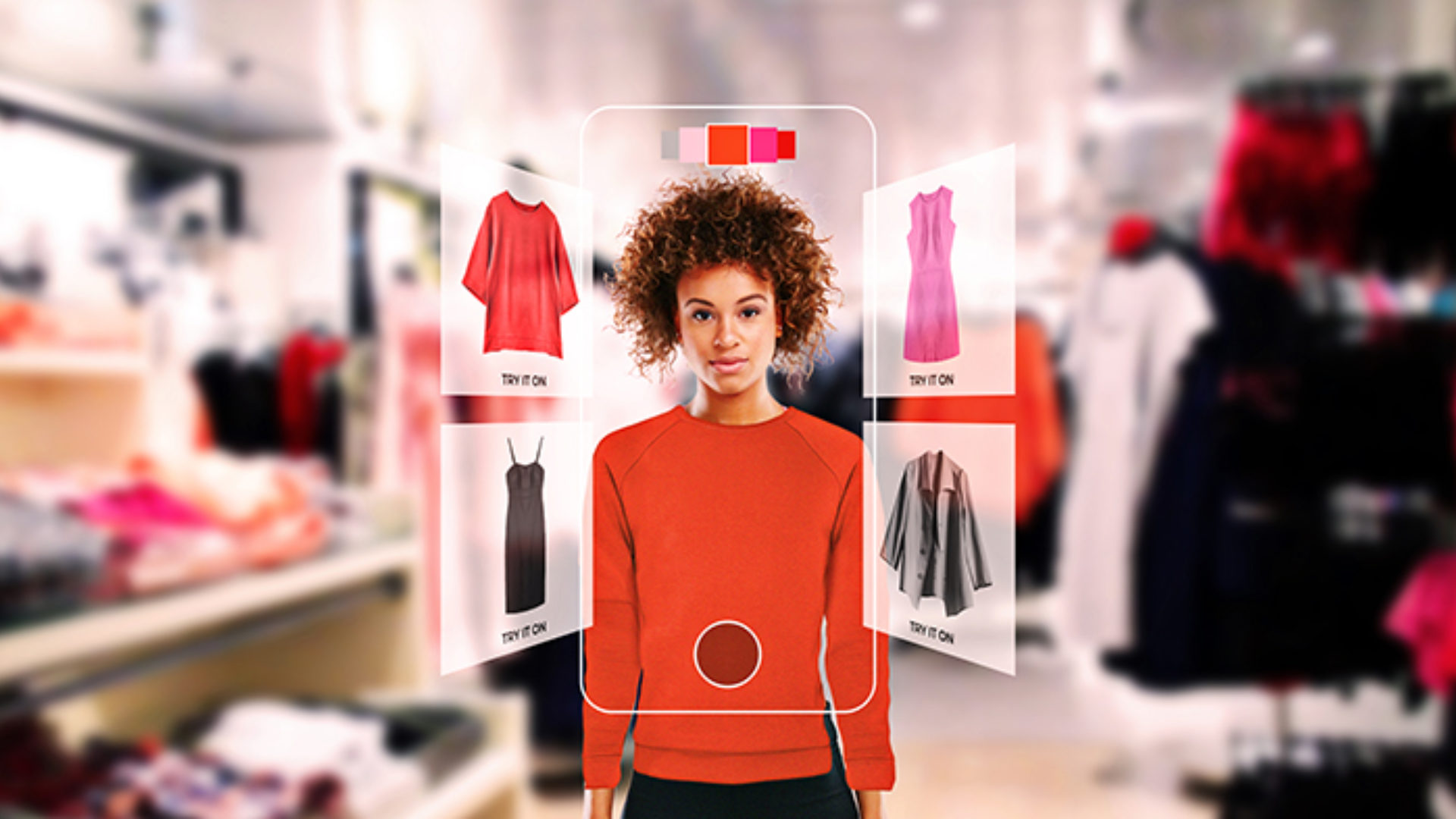
Virtual try-on technology powered by augmented reality is fundamentally reshaping how consumers shop for fashion and beauty products, transitioning online retail from a high-uncertainty experience to one rivaling—and in many ways exceeding—the confidence and convenience of in-store shopping. This technological revolution is no longer on the horizon; it is actively transforming purchasing behavior, reducing returns, and redefining customer expectations across the industry.
Market Growth and Scale
The virtual try-on platform market is experiencing explosive expansion. Valued at USD 5.9 billion in 2025, the market is projected to reach USD 22.1 billion by 2035, growing at a compound annual growth rate of 14.1%. This rapid growth reflects both consumer demand for immersive shopping experiences and retailer recognition that AR try-on is no longer optional but essential for competitive positioning. The technology has transitioned from experimental feature to strategic business imperative, particularly as younger demographics increasingly expect immersive, interactive shopping experiences across all retail channels.
How AR Try-On Technology Functions
Beauty and Makeup Try-On: Virtual makeup try-on employs sophisticated computer vision and facial recognition technology to deliver hyper-realistic product previews. The system detects over 50 facial landmarks with exceptional precision to ensure accurate product placement. Advanced convolutional neural networks analyze facial features at multiple points, enabling the AI to understand three-dimensional face geometry. The technology then applies dynamic 3D mesh generation, creating a digital face model onto which cosmetic pigments are texture-mapped in real-time.
The accuracy levels are remarkable. Modern systems achieve 91.5% shade matching accuracy, 94.2% facial recognition precision, and deliver 98.7% accuracy in detecting 68 facial landmarks. Real-time texture mapping simulates various makeup finishes—matte, dewy, and glossy—with 91.2% visual accuracy compared to physical application. The system continuously recalibrates as lighting and expressions change, ensuring the preview remains accurate regardless of environmental conditions. For users with diverse skin tones, the technology detects undertones with 92.1% precision for warm, cool, and neutral classifications, addressing historical limitations where virtual makeup looked inaccurate on darker skin tones.
Leading brands like Sephora pioneered this space in 2016 with their virtual mirror technology, enabling real-time lipstick and eyeshadow try-ons through app-based AR. L’Oréal developed ModiFace technology, now integrated across all its brands, while Ulta Beauty created an AR makeup catalog lens on Snapchat that generated 30 million product try-ons and $6 million in sales in just two weeks.
Fashion and Clothing Try-On: Fashion try-on technology operates through a more complex process involving 3D body scanning, avatar generation, and fabric simulation. The system begins by capturing user body measurements either through manual input, uploaded photos, or advanced 3D body scanning technology that captures over 80 precise measurements. Advanced algorithms then generate photorealistic digital avatars that accurately reflect the user’s body shape, including height, weight, and limb proportions.
Once the avatar is created, AI algorithms apply selected clothing items to simulate realistic fabric interaction. This involves physics-based simulations that model how different fabrics behave—including their stretch, drape, fold patterns, and movement. When users move or change position, virtual garments move naturally with the body rather than appearing pasted on, creating the illusion of actually wearing the item.
The technology now incorporates advanced motion capture capabilities enabling real-time body tracking for even more realistic visualization. AI fit prediction algorithms achieve 0.74 correlation between predicted and observed fit satisfaction using Random Forest algorithms, and 0.72 correlation using Support Vector Machines—sophisticated predictive accuracy that enables specific fit warnings like “2cm too narrow at bust” rather than vague generalities.
Luxury Brand Implementations
Premium fashion houses have become pioneers in AR try-on adoption, recognizing that the technology enhances brand perception and drives measurable revenue increases.
Gucci stands among the most aggressive adopters, enabling virtual try-on for sunglasses, sneakers, masks, lipsticks, and hats via its mobile app. The brand’s AR experiences prioritize visual excellence and brand consistency, allowing customers to see items in different colors, materials, angles, and lighting conditions. Gucci’s AR initiatives reached over 18 million users on Snapchat, boosting product page views by 188% and increasing purchase intent by 25%.
Louis Vuitton and Prada have integrated AR try-on functionality directly into their apps, with Prada using advanced computer vision algorithms to measure faces and bodies precisely, ensuring virtual products display accurately with correct positioning. This technical precision reflects luxury brands’ emphasis on delivering flawless visual experiences that reinforce brand prestige.
Burberry launched its Burberry Beauty Virtual Studio, enabling customers to try on different coats and jackets in multiple colors and materials. The brand also gamified its AR experience, allowing users to design custom 3D Pocket bag sculptures and share resulting images on social media, generating organic buzz around specific products. Burberry’s approach demonstrates how AR extends beyond try-on to become a social marketing tool, creating shareable moments that amplify brand reach.
Dior offers virtual try-on for both sunglasses and makeup, creating a seamless beauty-to-fashion experience. Christian Dior furthered innovation by using AI to create virtual audiences for live-streamed fashion shows, enabling real-time interaction between viewers and models. This expansion illustrates how AR technology is reshaping the entire customer journey, not just the try-on moment.
Other luxury implementations include Fendi’s gamified AR sneaker experience created in partnership with Meta in September 2022, while Rolex and Omega enable luxury watch virtual try-ons via Chrono24’s virtual showroom, with 3D jewelry from De Beers allowing customers to try on rings, necklaces, and bracelets with naturalistic movement that responds to head and hand positioning.
Kohl’s collaborates with Snapchat to offer its Augmented Reality Virtual Closet, bringing AR try-on to the mass-market segment. Farfetch, the luxury marketplace leader, enables customers to try on shoes, watches, and 3D models of bags in immersive, personalized virtual environments, demonstrating that the technology effectively scales across diverse luxury categories.
Beauty Industry Transformation
The beauty sector has become the primary driver of AR adoption due to the category’s inherent characteristics: vast product selection, significant color variation, and the impossibility of predicting how specific shades appear on individual complexions without trying them.
Shade Matching and Skin Tone Accuracy: Modern beauty AR systems achieve unprecedented accuracy in color prediction. Testing with 2,347 user-submitted images showed core matching accuracy of 89.4% when compared to professional makeup artist evaluations. The system maintains 93.8% accuracy in facial feature alignment across diverse skin tones and facial structures, achieving 93.4% landmark detection accuracy at 60 FPS on mid-range smartphones.
However, performance gaps persist at skin tone extremes, where accuracy drops by approximately 15% for both the lightest and darkest skin tones. Leading providers are actively addressing this limitation through expanded training datasets and refined machine learning models to ensure inclusive, accurate recommendations across the complete spectrum of human diversity.
Personalized Recommendations: Beyond virtual try-on, AI beauty systems now offer sophisticated personalization. The system analyzes uploaded images, identifies skin tone and undertone, and recommends specific products matched to the user’s complexion. User studies demonstrate 85% satisfaction with initial recommendations, increasing to 91% after incorporating two-step refinement processes. Confidence scoring systems prove valuable; recommendations scoring above 90% confidence are accepted by users in 94% of cases.
Platform Accessibility: Beauty AR experiences deploy across multiple platforms maximizing reach. Sephora’s implementation requires app download for full functionality, while emerging web-based AR approaches eliminate this friction, allowing customers to access try-on experiences directly from brand websites or social media without installation requirements.
Fashion Retail Impact and Return Reduction
The fashion industry confronts a persistent challenge: 40-50% return rates for apparel, with 53% of returns driven by incorrect sizing. This represents a $218 billion annual problem globally. AR try-on directly addresses this critical pain point through multiple mechanisms.
Return Reduction: Retailers implementing comprehensive AR solutions report 30-40% reductions in return rates, directly protecting profit margins and reducing logistics costs. The mechanism is straightforward: when customers can accurately visualize fit and size before purchase, sizing-related disappointment diminishes substantially. 3D body scanning technology reduces sizing errors particularly effectively, cutting return rates by up to 25% while simultaneously boosting customer confidence.
Conversion Rate Optimization: AR-enabled fashion shopping demonstrates exceptional conversion metrics. Retailers report conversion rate increases up to 200% alongside 40% boosts in buyer confidence. Farfetch’s immersive try-on experiences demonstrate that luxury retailers can achieve these performance levels at scale. The mechanism combines reduced uncertainty with increased engagement: customers spend extended time interacting with AR features, exploring combinations and visualizations that ultimately drive purchase commitment.
Zalando’s Pilot Success: Leading fast-fashion platform Zalando piloted virtual fitting rooms powered by 3D body scanning, generating significant customer loyalty improvements while demonstrating the technology’s effectiveness in reducing returns. This initiative validates that virtual fitting rooms are transitioning from experimental luxury features to standard retail infrastructure for mainstream fashion e-commerce.
Emerging Technological Frontiers
Advanced 3D Body Scanning: Next-generation body scanning technology captures over 80 precise measurements, enabling custom sizing that dramatically exceeds traditional tape-measure accuracy. Mobile apps increasingly integrate this capability, making personalized 3D scanning accessible to mainstream consumers rather than limiting it to high-end retailers. This democratization enables small brands and emerging fashion entrepreneurs to offer similar capabilities as luxury competitors.
Fabric Simulation and Physics Modeling: Current implementations simulate fabric behavior with increasing sophistication, modeling how specific textiles stretch, drape, fold, and move in response to body positioning and movement. Advanced systems account for variables like fabric weight, weave density, and elasticity, enabling predictions of how specific materials will perform on individual body types.
AI-Powered Fit Prediction: Machine learning models now predict fit satisfaction with actionable specificity rather than vague warnings. Systems can identify “2cm too narrow at bust” or “fits well with 1cm extra at hips,” enabling customers to make informed size decisions or request custom alterations. This precision transforms virtual try-on from visualization tool to predictive recommendation engine.
The Future of AR Try-On: 2025 and Beyond
Metaverse Integration: The convergence of fashion and digital avatars will enable consumers to try on virtual fashion for their metaverse avatars before purchasing corresponding physical items, creating a unique bridge between digital and physical consumption. This represents an entirely new revenue stream for fashion brands and a novel shopping category for consumers.
Haptic Feedback Technology: Emerging systems integrate touch simulations, allowing users to “feel” fabric texture, weight, and structure. While currently nascent, haptic integration will provide multisensory experiences matching physical try-on more closely.
Real-Time Body Tracking: Advanced motion capture technology will enable customers to move, pose, and interact with clothing in real-time, observing how garments perform across diverse body positions and movements. This addresses a current limitation where static-position visualizations cannot reveal how clothing behaves during actual wearing.
Cross-Platform Consistency: Seamless AR experiences across devices and platforms—desktop, mobile, in-store smart mirrors, and social commerce—will become standard. This consistency ensures customers enjoy equivalent experiences regardless of shopping context.
Inclusive Sizing and Diverse Body Representation: Future systems will increasingly feature extensive diversity in body types, skin tones, facial features, and presentations, enabling all consumers to see themselves accurately reflected in try-on experiences. This inclusivity addresses historical retail barriers that marginalized customers outside conventional demographic categories.
Sustainability Integration: By reducing returns, overproduction, and waste, AR try-on supports sustainability imperatives. Retailers implementing these technologies can reduce environmental impact while simultaneously improving profitability. This alignment of business metrics with sustainability goals accelerates adoption across the industry.
Challenges and Implementation Barriers
Despite transformative potential, AR try-on adoption faces several obstacles. Platform Fragmentation requires developers to optimize across ARKit (iOS), ARCore (Android), and various browser implementations, increasing development complexity and cost. Device Dependency means experience quality varies based on smartphone capabilities, limiting access for consumers with older devices.
Privacy Considerations arise from facial recognition and body scanning requirements, necessitating robust data protection mechanisms and transparent privacy policies to build consumer trust. Content Creation Complexity requires detailed 3D product models, realistic fabric simulations, and continuous catalog updates—substantial investments for retailers managing thousands of SKUs.
Accessibility Gaps remain in 3D body scanning applications and motion simulation capabilities that are not yet widely available or user-friendly. Performance Optimization must deliver responsive, lag-free experiences on diverse devices to prevent user frustration and abandonment.
Augmented reality try-on technology represents the most significant transformation in fashion and beauty retail since the emergence of e-commerce itself. By eliminating uncertainty through realistic visualization, enabling personalized sizing and fit prediction, and delivering measurable improvements in conversion rates and return reduction, AR try-on is transitioning from innovative feature to fundamental retail infrastructure. Luxury brands have validated the business case, mass-market retailers have begun implementation, and consumer adoption continues accelerating as device capabilities improve and platform accessibility increases. For fashion and beauty brands not yet implementing AR try-on, competitive urgency is intensifying as this technology rapidly becomes an expected standard rather than a differentiating innovation. The future of shopping lies in enabling customers to experience products before purchase with near-perfect fidelity—and augmented reality is delivering exactly that promise.