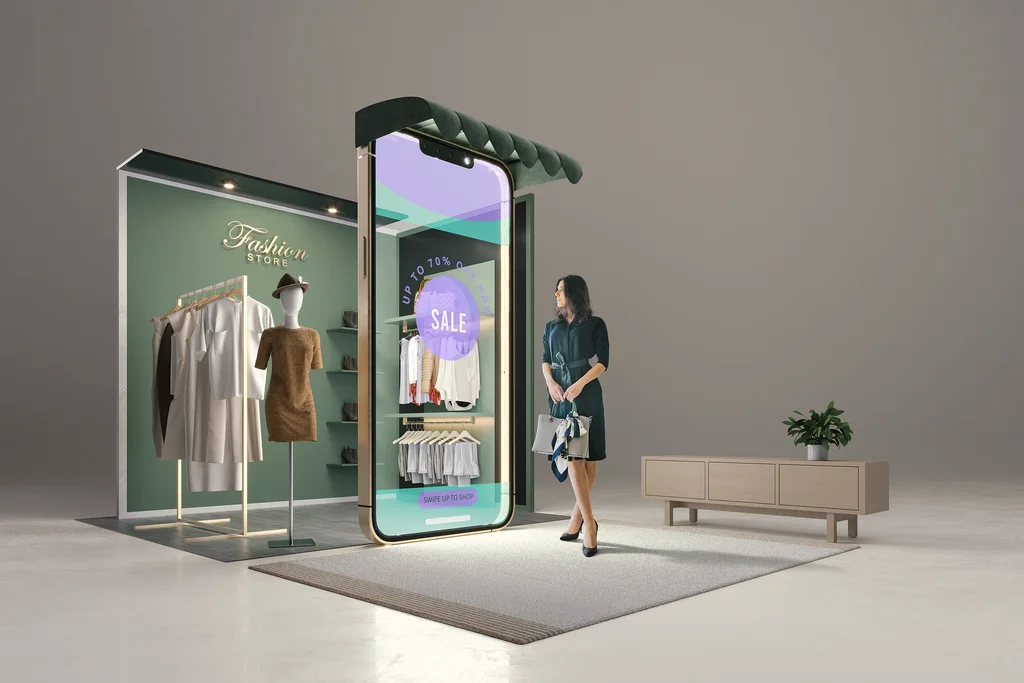
Augmented reality has become the connective tissue transforming retail from a fragmented experience of separate online and offline channels into a unified, seamless journey where customers move fluidly between digital and physical environments. This convergence—termed “phygital retail”—represents a fundamental reimagining of commerce that leverages the best attributes of both worlds: the convenience and personalization of digital platforms combined with the tactile engagement and human connection of physical stores. The result is transformative for both consumers and retailers.
Understanding Phygital Retail
Phygital retail merges physical and digital shopping into cohesive experiences where each channel enhances rather than competes with the others. Rather than viewing online stores and physical locations as alternatives, successful retailers now recognize them as complementary touchpoints in a unified customer journey. A shopper might research a product online using AR visualization, visit a physical store to experience it through smart mirrors, and ultimately purchase through whichever channel feels most convenient—all with seamless continuity between touchpoints.
The fundamental principle underlying phygital strategies is data integration. By unifying online and in-store data, retailers create a comprehensive profile of each customer spanning their digital browsing history, purchase patterns, in-store interactions, and personalized preferences. This unified view enables retailers to deliver genuinely personalized experiences: a customer who virtually tried on makeup through a mobile app receives personalized recommendations when visiting a physical store, and the makeup they tried appears in their online recommendations when they later shop from home.
AR Smart Mirrors: Transforming In-Store Experiences
AR smart mirrors represent the most dramatic transformation of physical retail environments, converting traditional fitting rooms into interactive digital showcases that enhance efficiency while dramatically improving the shopping experience.
How Smart Mirrors Function: AR smart mirrors combine depth-sensing cameras with screen displays and sophisticated body-tracking technology. As customers stand before the mirror, advanced algorithms track their body position and movements, overlaying selected products onto their reflection in real-time. Unlike traditional try-ons requiring customers to physically change clothes repeatedly, smart mirrors enable instant switching between styles, colors, and sizes through simple touchscreen interactions.
The technology employs depth sensors capturing three-dimensional body data, enabling virtual garments to drape realistically and respond naturally to body movements. When a customer raises their arm, the virtual jacket sleeve rises accordingly; when they turn, the fabric drapes authentically around their body rather than appearing pasted on.
Transformative Business Impact: The business results from smart mirror deployment are extraordinary. Sephora’s AR mirror implementation generated a 31% sales rise among trial users, while conversion rates increased by 30%. Charlotte Tilbury’s AR magic mirrors in flagship stores contributed to double-digit growth in try-before-you-buy sales and cross-selling, with customers purchasing multiple complementary items rather than single products.
The mechanism driving these improvements extends beyond impulse purchasing. Stores with AR mirrors experience five times longer customer dwell time, creating substantially more opportunities for staff-assisted selling and cross-category engagement. By allowing customers to virtually try on products without physically changing clothes, mirrors reduce fitting room bottlenecks that create customer frustration and operational staffing challenges. Tommy Hilfiger’s in-store AR mirrors generated a 60% increase in try-on traffic and store visit duration, demonstrating that AR mirrors increase rather than decrease physical store traffic and engagement.
Omnichannel Integration: The true power of AR smart mirrors emerges through omnichannel integration. Sophisticated implementations like PICTOFiT connect in-store AR mirrors directly to e-commerce systems, enabling customers to create personalized avatars in-store that carry through to their online shopping experiences. A customer who creates a 3D avatar at an in-store smart mirror can use that same avatar when shopping online from home, providing continuity that reinforces purchase confidence across channels.
Similarly, smart mirrors can display the entire product catalog, not just items physically in stock. A customer trying on clothing through an in-store AR mirror can visualize items available through e-commerce but not present in that location, enabling “infinite inventory” experiences where product assortment limitations never constrain the shopping experience.
AR Storefronts: Bridging Digital and Physical Engagement
While smart mirrors transform in-store experiences, AR storefronts revolutionize the customer journey before they ever enter a store, converting passive window shopping into interactive engagement that drives foot traffic.
Interactive Window Displays: AR storefronts overlay digital content on physical store exteriors, visible only through smartphone cameras pointing at the storefront. Imagine walking past a fashion retailer’s window and pointing your phone to see animated models wearing the season’s latest collection, or a furniture store displaying how a sofa appears in a living room environment, or a cosmetics brand enabling virtual makeup try-ons directly on the storefront.
Engagement and Traffic Impact: The engagement metrics from AR storefronts are exceptional. Brands using AR storefronts report up to 11 times the engagement compared to static displays. This dramatic difference reflects the inherent power of interactive experiences to capture and maintain attention. AR storefronts work continuously—even when stores are closed, digital content continues attracting attention and building anticipation.
The traffic conversion is equally significant. Passersby engaging with AR storefronts frequently convert to in-store visits or e-commerce engagement, as the interactive experience prompts immediate action—either visiting the store or accessing the brand’s online channels through QR codes or clickable links embedded in AR experiences. In high-footfall areas like shopping malls or city centers, AR storefronts become powerful magnets, converting casual browsers into engaged prospects.
Measurable Analytics: Beyond consumer engagement, AR storefronts generate valuable analytics. Retailers can track how many people engage with storefront displays, which content captures greatest interest, and crucially, how many virtual interactions convert to physical visits or online purchases. This data transforms windows from decorative elements into performance-marketing channels with quantifiable ROI.
Seasonal and Campaign Flexibility: AR storefronts enable rapid campaign iteration. Rather than creating new physical window displays for seasonal changes or product launches, retailers update digital content instantly, allowing frequent refresh without substantial cost. A beauty brand can showcase every shade in a new lipstick line through AR, simultaneously offering in-store discounts to drive purchases.
Click-and-Collect: The Frictionless Bridge
Click-and-collect (also termed BOPIS—”buy online, pick up in store”) represents perhaps the most straightforward yet powerful manifestation of phygital retail, eliminating friction from both online and in-store shopping by combining digital convenience with immediate physical access.
The Customer Experience: A customer browses products online from home, selects items, completes payment, and receives confirmation. Within hours or minutes, the order is ready for pickup at a conveniently-located physical store. The customer arrives at their scheduled time, collects pre-packed items without searching through aisles or waiting in checkout lines, and leaves. The experience combines online convenience (no need to visit stores for research or browsing) with immediate gratification (no delivery wait time).
Market Scale and Growth: The click-and-collect market is projected to reach $703 billion worldwide by 2027, reflecting enormous consumer demand for this hybrid fulfillment model. The mechanism addresses persistent pain points: customers avoid shipping delays and fees, retailers reduce last-mile delivery costs and logistics complexity, and both parties benefit from reduced returns (customers inspect items before leaving the store).
Business Impact for Retailers: While click-and-collect appears customer-convenience focused, it generates profound business benefits. The service drives substantial foot traffic to physical locations: customers visiting for pickup often browse additional merchandise, creating upsell and cross-sell opportunities. This traffic increase reveritalizes brick-and-mortar stores that faced obsolescence as e-commerce grew.
For inventory management, click-and-collect enables flexibility. Retailers can optimize inventory allocation across locations, centralizing slow-moving items while ensuring faster-moving merchandise is readily available for local customer pickup. This efficiency generates material cost savings while improving service levels.
Operational Benefits: From an operational perspective, click-and-collect streamlines fulfillment. Rather than shipping individual orders to customer homes, retailers pick and pack items in concentrated batches, leveraging economies of scale. Store associates become fulfillment center workers during off-peak hours, maximizing labor utilization. Retailers experience fewer damaged goods complaints and returns, as customers inspect items immediately upon pickup rather than discovering issues days later upon delivery.
Personalized Experiences Through Data Integration
The omnichannel foundation enables personalization exceeding what either channel could achieve independently. When online and in-store data unify, retailers create comprehensive customer profiles informing genuinely personalized recommendations.
Data-Driven Personalization: A customer browsing makeup online receives suggestions based on their skin tone analysis from previous in-store AR mirror interactions. A clothing shopper visiting a physical store receives personalized size recommendations based on their online purchase history and try-on activities. A furniture customer navigating a showroom receives layout suggestions informed by the virtual room configurations they explored through IKEA Place.
AI-powered systems analyze these comprehensive data profiles to deliver personalization at scale. Studies show that 17% increases in purchase intent occur when AR experiences are tailored to individual customer preferences. This personalization strengthens customer relationships, increases lifetime value through improved satisfaction and repeat purchases, and generates competitive advantages by creating switching costs through accumulated personalization benefits.
Privacy and Data Governance: However, data integration raises legitimate privacy concerns. Successful retailers address these transparently through clear data policies, anonymization where appropriate, and robust security. When consumers trust retailers with their data, the personalization benefits substantially exceed data-sharing risks.
Wayfinding and In-Store Navigation
Beyond try-on experiences, AR enhances in-store efficiency through intelligent wayfinding integrated with IoT sensors and micro-location technology. Rather than customers wandering stores searching for products, AR-powered mobile apps guide them through optimal paths to located items.
Operational Efficiency: This navigation assistance reduces customer frustration while freeing store associates from providing directions, enabling them to focus on higher-value activities like personalized recommendations and consultation. For large stores like Costco or Home Depot where customers spend substantial time locating specific items, AR navigation dramatically improves experience quality.
Brand Ambassador Integration: Some implementations incorporate digital brand ambassadors or branded guides into AR navigation experiences, creating immersive, gamified store exploration. Rather than sterile directional guidance, retailers craft branded experiences that entertain while directing traffic.
Virtual Try-On Integration Across Channels
Perhaps the most seamless integration of AR across channels is virtual try-on that follows customers across touchpoints without interruption.
Consistent Experience Architecture: A customer begins exploring makeup through YouCam Makeup on their phone, trying different shades and creating looks. Later, visiting a Sephora store, they encounter the same brand’s AR mirror reflecting the identical product catalog. They try the exact products virtually through the mirror, then purchase either in-store or through the app later—the product, visualization, and purchase platform change, but the underlying technology and experience architecture remain consistent.
Zara’s Mobile Integration: Zara pioneered channel-agnostic AR try-on by enabling customers to point smartphones at in-store displays and windows to see models wearing selected outfits. The app works at home through Zara’s website, through Zara’s physical stores, and through Zara’s social media. Regardless of entry point, the AR functionality remains consistent, reinforcing brand experience architecture across channels.
The Connected Customer Journey
Successful phygital implementations create orchestrated customer journeys where online and in-store activities inform and enhance one another.
Journey Scenarios: A practical example demonstrates the flow:
- A customer researches sofas on the West Elm website, using AR placement to visualize how items appear in their living room
- They save three preferred options to their wishlist
- They visit a West Elm physical store, where staff are notified of their wishlist through unified customer profiles
- In-store, they use AR smart mirrors to visualize how the sofas appear with different throw pillows and accessories available in the store
- They complete the purchase through whichever channel feels most convenient—in-store or later through the app
Journey Continuity Benefits: Throughout this journey, customer preferences accumulate across touchpoints. The furniture they tried increases the relevance of subsequent home décor recommendations. The accessories they paired with sofas through smart mirrors inform future suggestions. When the sofa arrives, app-based assembly instructions and complementary product recommendations leverage accumulated knowledge of their style and needs.
Data and Analytics: The Hidden Infrastructure
Behind visible AR experiences sits sophisticated analytics infrastructure that transforms interaction data into competitive advantages.
Behavioral Insights: AR interactions generate unprecedented behavioral visibility. Retailers see exactly which products customers try on most, how long they engage with items, which color options receive greatest interest, and whether virtual try-ons translate to purchases. This specificity exceeds traditional retail analytics where managers could observe shopping patterns but not precise product-level engagement.
Real-Time Optimization: These insights enable real-time merchandising optimization. If AR data shows customers repeatedly trying on an item but rarely purchasing, the insight might indicate pricing misalignment, sizing inaccuracy, or description issues requiring correction. If certain color variations show disproportionately high engagement, inventory allocation can shift accordingly.
Predictive Personalization: Machine learning models processing accumulated AR interaction data become increasingly sophisticated at predicting individual preferences. Over time, systems learn which style combinations appeal to each customer, enabling recommendations requiring no explicit customer input.
Challenges in Phygital Implementation
Despite transformative potential, phygital retail faces implementation challenges. Creating genuine omnichannel coherence requires substantial technical integration across disparate systems—online platforms, in-store point-of-sale systems, inventory management, and customer data infrastructure must communicate seamlessly.
Privacy and Data Governance require robust frameworks ensuring consumer trust while maximizing personalization value. Development Complexity and Cost mean sophisticated phygital experiences remain accessible primarily to large retailers with substantial capital for infrastructure investment, though no-code AR platforms are beginning to democratize access.
Staff Training becomes critical—store associates must understand how to effectively use AR mirrors and omnichannel data to enhance customer experiences rather than create friction.
The Future of Phygital Retail
Industry observers project increasingly sophisticated integration. Cross-Platform Consistency will improve as retailers develop unified AR architectures working seamlessly across mobile, web, in-store, and social contexts. AI-Powered Predictive Personalization will advance, with systems anticipating customer needs before explicit requests. Immersive Physical Stores will emerge where digital and physical elements merge so thoroughly that distinguishing between them becomes impossible.
Augmented reality has fundamentally transformed the retail landscape from a world of competing channels into an integrated ecosystem where physical stores and digital platforms enhance one another. Smart mirrors convert fitting rooms into interactive showcases, AR storefronts transform windows into engagement magnets, click-and-collect eliminates fulfillment friction, and unified customer data enables personalization exceeding either channel’s isolated capabilities. The convergence is no longer emerging—it’s becoming standard infrastructure as 81% of retailers plan to expand digital channel presence while simultaneously investing in in-store AR experiences. For retailers, the strategic imperative is clear: those succeeding in the coming decade will be those who orchestrate seamless phygital journeys where customers move fluidly across touchpoints, each interaction building confidence and engagement that ultimately drives revenue growth. The distinction between “online” and “offline” retail is dissolving, replaced by a unified commerce paradigm where the question is no longer “which channel?” but rather “which touchpoint best serves this customer’s needs at this moment?”