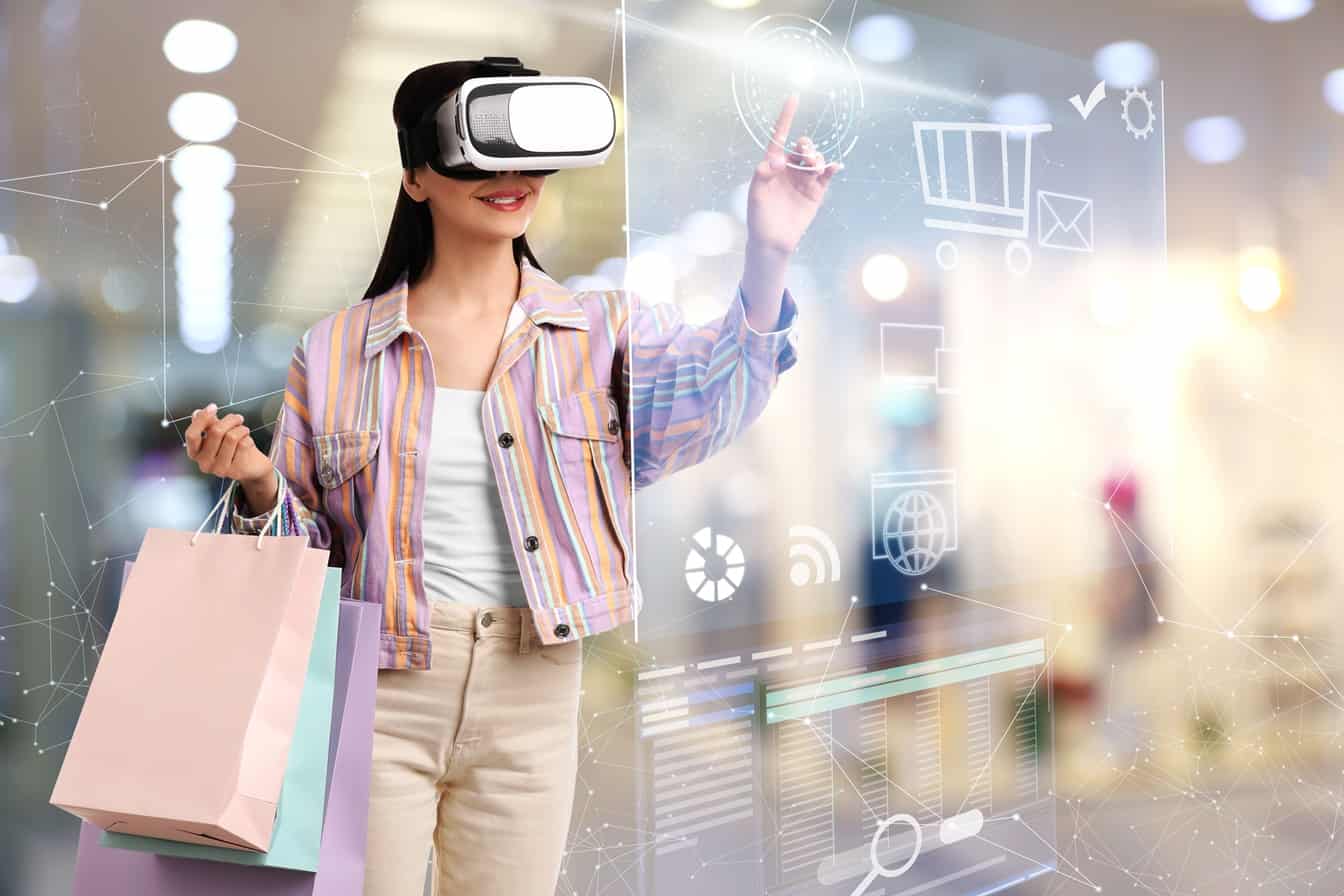
Augmented reality (AR) represents one of the most significant technological shifts in e-commerce, fundamentally changing how consumers discover, evaluate, and purchase products online. Rather than relying solely on flat images and descriptions, shoppers can now visualize products in their own environments or directly on their bodies before completing a purchase, bridging the long-standing gap between the convenience of online shopping and the confidence of in-store experiences.
The Scale and Growth of AR Shopping
The AR in e-commerce market is experiencing explosive growth. The global market was valued at USD 5.88 billion in 2024 and is projected to reach USD 8.33 billion in 2025, with expectations to exceed USD 38.5 billion by 2030, growing at a compound annual growth rate (CAGR) of 35.8% during this period. This unprecedented growth trajectory reflects both consumer demand and retailer investment in immersive shopping experiences. Asia Pacific is leading regional growth with a projected CAGR of over 35% from 2025 to 2030, followed by Europe at over 22% and the U.S. at over 21%.
How Virtual Try-On Technology Works
Virtual try-on technology, the most prominent AR application in retail, employs a sophisticated combination of artificial intelligence, computer vision, and 3D modeling. The process begins with detection and mapping, where advanced algorithms identify key points on a user’s body—facial contours for makeup and eyewear, foot shape for footwear, or hand positioning for accessories. The system then builds a detailed 3D model of the user’s features, after which digital product representations are precisely overlaid and simulated to show how items would look and fit.
Real-time interaction is crucial to the experience. Users can view products from multiple angles, rotate items, and see how they respond to movement and lighting conditions, creating a realistic preview that closely mimics trying on items physically. This level of accuracy is achieved through machine learning algorithms that understand depth, perspective, lighting, and texture.
Key Applications Across Industries
AR technology has been successfully adapted across numerous retail sectors, each addressing specific consumer pain points:
Fashion and Apparel: Brands enable customers to visualize how clothes fit on their body shapes, seeing fabric draping and movement in real-time. ASOS launched its “See My Fit” feature using AR to display clothing on different body types and sizes, allowing shoppers to visualize items across diverse models and building confidence before purchase.
Eyewear: Virtual try-on for glasses is particularly effective because accurate frame positioning is critical. Warby Parker has pioneered this space, using facial mapping technology to ensure glasses sit correctly on individual face shapes.
Makeup and Beauty: Cosmetics brands allow users to preview lipstick shades, eyeshadows, and other products on live camera feeds or uploaded photos. Ulta Beauty’s AR makeup catalog lens on Snapchat generated 30 million product try-ons and $6 million in sales in just two weeks.
Footwear: Shoe retailers enable customers to virtually “wear” sneakers and other shoes to preview style and determine proper sizing. Gucci’s pioneering AR shoe try-on app feature reached over 18 million users on Snapchat, boosting product page views by 188% and increasing purchase intent by 25%.
Furniture and Home Décor: Customers can virtually place furniture items in their living spaces to evaluate size, color coordination, and overall aesthetic fit before committing to purchase. This application particularly benefits from AR’s ability to show products in realistic environmental contexts.
Jewelry and Accessories: Virtual rings, earrings, watches, and other accessories are precisely overlaid on users’ features for accurate visualization.
Impact on Consumer Behavior and Business Metrics
The quantifiable impact of AR on online shopping has been substantial. Research demonstrates that over 90% of American shoppers either use AR or are open to using it for shopping, and 98% of those who have tried AR found it helpful in making purchase decisions. Consumer sentiment is remarkably positive: 79% of shoppers show interest in interacting with AR before buying an item, and 71% of consumers indicate they would shop more frequently if AR is an option.
The business outcomes are equally impressive. Retailers implementing AR report 30% fewer returns on average, a critical metric given that returns represent significant costs for e-commerce operations. Additionally, companies see 45% boosts in buyer confidence and 60% less hesitation during checkout among customers who use AR features. Some brands have achieved conversion rate increases up to 40% with AR features, while engagement metrics show that 65% of consumers acknowledge that AR simplifies the shopping experience.
Nike reported an 11% increase in sales from AR-driven product try-ons in early campaigns, while luxury retailer Gucci’s social AR initiatives consistently demonstrate measurable return on investment. The psychological impact of AR extends beyond immediate sales—immersive experiences reduce decision-making uncertainty, alleviating the cognitive burden associated with online purchasing and facilitating better-informed choices.
Strategic Business Benefits
For retailers, AR implementation addresses several critical challenges simultaneously. Reduced Returns: By allowing customers to visualize products accurately, AR minimizes purchases driven by mismatched expectations regarding size, color, fit, or aesthetic compatibility. This reduction in return rates directly protects profit margins and reduces logistics costs.
Enhanced Customer Engagement: AR experiences encourage customers to spend more time exploring products within apps or on websites, increasing engagement duration and fostering deeper brand connections. This extended interaction typically leads to higher average order values as shoppers discover complementary items through extended browsing.
Improved Brand Perception: Companies implementing AR technologies are perceived as innovative and forward-thinking, creating competitive advantages by appealing to tech-savvy consumers and differentiating brands in crowded marketplaces.
Personalization and Data Integration: AR platforms collect valuable behavioral data about customer preferences, interaction patterns, and decision-making processes, enabling retailers to offer increasingly personalized product recommendations and targeted marketing interventions.
Current AR Implementation Models
Retailers are deploying AR through multiple channels. Mobile Apps: Native applications like Gucci’s AR app offer high-quality experiences optimized for specific platforms (iOS and Android) but require download commitments. WebAR: Browser-based AR experiences don’t require app installations, improving accessibility and user adoption, though they may have performance limitations with highly complex 3D models. In-Store AR Mirrors: Smart mirrors with AR capabilities are being installed in physical retail locations, allowing customers to virtually try on products without changing clothes. While these incur hardware and setup costs, retailers increasingly view them as worthwhile experiential investments. Social Commerce Integration: Platforms like Snapchat have become significant AR shopping channels, with brands creating AR lenses that enable try-ons within social apps, allowing immediate purchasing without leaving the platform.
Challenges and Barriers to Adoption
Despite its transformative potential, AR adoption faces several obstacles. Technological Barriers: Advanced hardware and software requirements mean that experience quality varies based on device capabilities. VR experiences, in particular, require high-end headsets that remain relatively expensive for average consumers. Platform Fragmentation: Developers must optimize AR applications across multiple platforms—ARKit for iOS, ARCore for Android, and various VR headsets—each with different technical requirements and capabilities.
Content Creation Complexity: Developing realistic 3D product models, animations, and immersive environments requires specialized expertise and sophisticated tools. Managing and updating this content across large product catalogs presents substantial technical and financial challenges.
Consumer Behavior Barriers: Older demographics may be slower to adopt AR technologies, with concerns about ease of use and unfamiliarity limiting adoption among certain customer segments. Some consumers still perceive AR as a “gimmick” rather than a practical tool.
Infrastructure Requirements: Seamless AR experiences depend on high-speed internet connectivity and powerful devices. In regions with less developed digital infrastructure, these requirements create barriers to adoption.
Future Evolution and Trends
The AR shopping landscape is rapidly evolving. AI-Powered Personalization: Machine learning algorithms are enabling real-time experience customization based on customer preferences, browsing behavior, and purchase history, moving toward more intelligent, adaptive shopping assistants.
Mixed Reality and Spatial Computing: As hardware evolves, hybrid retail experiences combining physical and digital elements will become standard, with seamless transitions between online and in-store environments.
Social Commerce Integration: AR filters and virtual shopping via social platforms like Instagram and TikTok are becoming standard, particularly appealing to Gen Z shoppers who expect immersive experiences within their preferred social networks.
Virtual Influencers and AI Avatars: AI-powered avatars may soon function as shopping assistants within virtual stores, providing personalized guidance and recommendations with unprecedented sophistication.
Smart Glasses Expansion: The smart glasses segment is expected to witness the highest CAGR through 2030, driven by advancements in lightweight, affordable, and stylish devices that enable hands-free shopping experiences.
Augmented reality is fundamentally redefining online shopping by transforming passive product browsing into interactive, personalized experiences. By enabling customers to visualize products in their own environments or on their bodies, AR dramatically reduces purchase uncertainty, decreases return rates, and increases conversion rates. The combination of explosive market growth, positive consumer sentiment, measurable business benefits, and continuous technological innovation indicates that AR will transition from an emerging novelty to a standard expectation in online retail. For retailers not yet implementing AR solutions, adoption is becoming increasingly urgent to remain competitive as consumer expectations for immersive, personalized shopping experiences continue to rise.